Neve Tzedek – the Pioneers’ Preserve of Tel-Aviv

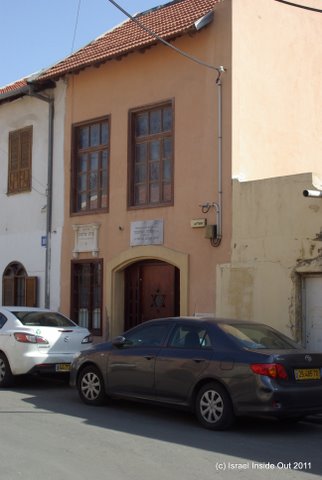
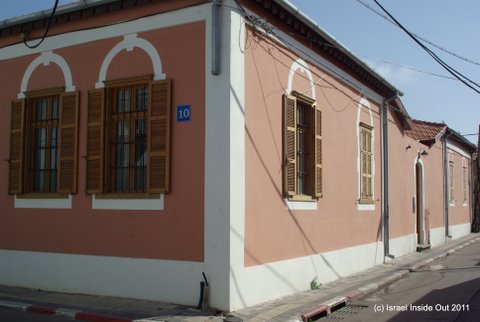
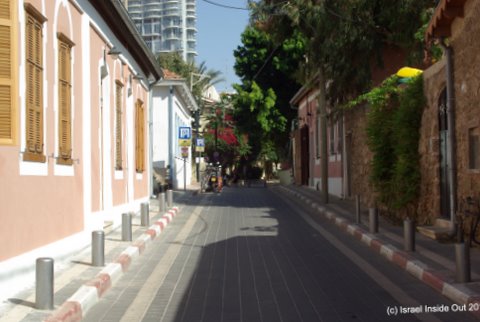
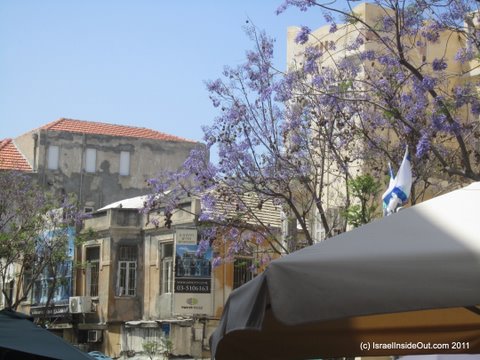
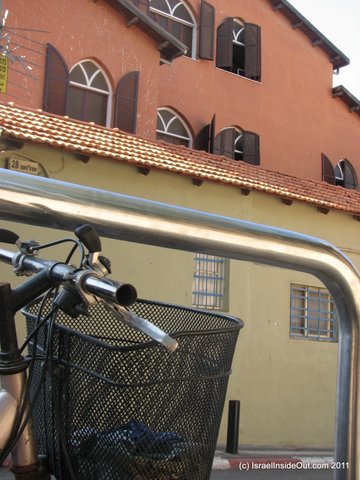
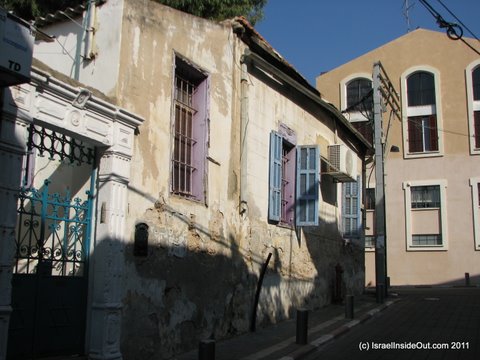
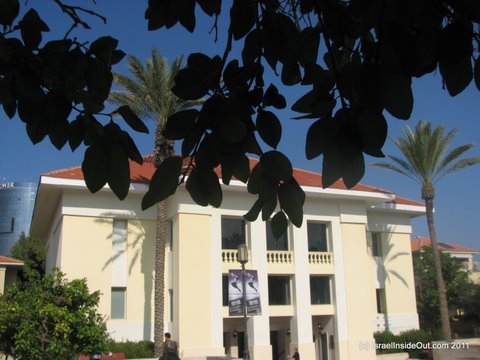
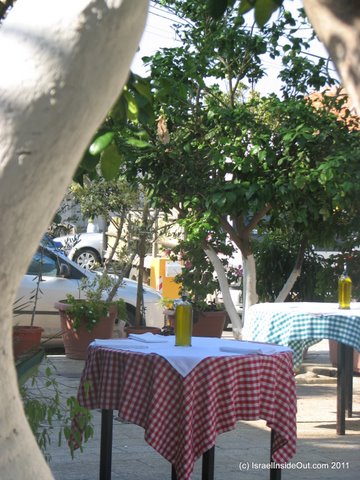
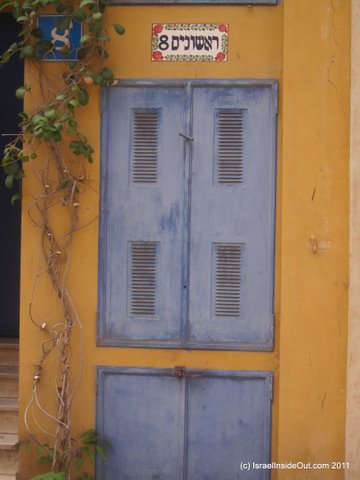
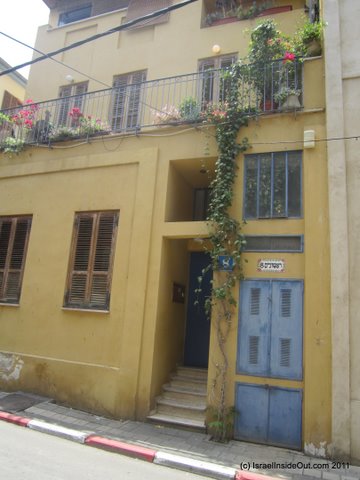
The beautifully restored houses and streets of Neve Tzedek, founded 22 years before Tel Aviv, preserve the romance of early Jewish urban settlement. This picturesque area is alive with boutiques, shops galleries, stylish cafes and restaurants. In the early 20th century, Neve Tzedek was home to famed writers and artists, including Nahum Gutman and the Nobel laureate, writer S.Y. Agnon. Highlights include the Nahum Gutman Museum, the Rokach House gallery and the Suzanne Dellal Center, a bustling dance and theater complex, home to the renowned Bat Sheva Dance Company.
A Walk in the Historic Neighborhoods of Little Tel Aviv

Neve Tzedek Background

Neve Zeddek Synagogue
In 1887 the first seeds were sown that would eventually grew into the new city of Tel Avivwhen a Jewish neighborhood called Neve Tzedek (also Neve Zeddek or Neve Zedek) was established outside the walls of the ancient port city of Jaffa. Three years later a second Jewish neighborhood outside Jaffa's walls, named Neve Shalom, was established nearby. Within the space of a decade these neighborhoods became the center of Jewish Jaffa's public and cultural life. Residents included Nobel prize winning author S. Y. Agnon, Israel's national poet Chaim Nahman Bialik and the painter Nachum Guttman, to whom a small museum in the neighborhood is dedicated.
In 1909 a group of 66 Jewish families gathered on a sand dune nearby to found a new city initially called Achuzat Bayit, but shortly thereafter renamed Tel Aviv. As the center of the new city shifted north, Neve Tzeddek and Neve Shalom were eclipsed by more modern neighborhoods and the area deteriorated. Slated to be demolished in favor of high rises, in the late 1980's and early 1990's Neve Tzeddek and Neve Shalom were saved from the wrecker's ball by proactive preservation activists and the granting of some additional building rights to local property owners. Today these neighborhoods are genuinely a pleasure to walk through, and of course don't forget to bring your camera.

Neve Zeddek Building
Neve Tzedek Walk
We'll begin our walk on Hamered St. behind the Dan Panorama hotel. Cutting across some fairly unattractive looking parking lots takes us to Ein Yaakov St. Turning right (south) onto Ein Yaakov St. we follow it until Achva St., where we turn left. Along Ein Yaakov and Achva Streets we can still see some badly dilapidated houses. This is what the most of the neighborhood looked like 20 years ago. At Shabazi St. we turn right. Walking along the street we see through the renovated buildings the changes that have taken place since then.
At the shady corner of Elazar St. next to a restaurant named Suzanna, we turn into a pedestrian lane that leads to the Suzanne Dellal Center, where we pass through a building into an open court. Today it serves as a theater and the home of two of Israel's leading dance companies, the Batsheva Dance Company and the Inbal Dance Group, as well as the Orna Porat Theater for Children. In the early 20th century, the two buildings, which frame the open court were pioneering educational institutions, a Hebrew speaking girls school, and a French speaking boys school, the latter sponsored by the Alliance Israelite Universelle organization. The girls school was considered to be a radical innovator, not only did it offer girls a secular education, and in Hebrew no less, but its curriculum even included physical education! The linguistic differences between the schools were at the center of an ideological and cultural clash with the Zionist leadership favoring Hebrew education, while Alliance championed the promotion of French culture.

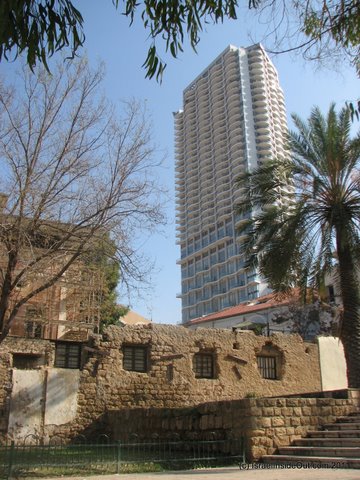
Neve Zeddek Old and New Cityscapes
We continue up a lane marked by an ice cream shop and turn right onto Chelouche St. Aaron Chelouche was a pioneering landowner and industrialist, who sold some of his property at a token fee to the Neve Tzeddek Society for Building Homes in Jaffa in order to encourage the creation of a new neighborhood. At the corner of Chelouche and Rokach Streets stands the former home of Rivka and Shlomo Aboulafia. The Nobel prize winning author S. Y. Agnon rented a room in this house and here he launched his auspicious literary career.
We continue up Rokach St. to find the Nachum Guttman Museum, dedicated to the local Tel Aviv artist, who grew up in the neighborhood in the early 20th century. Scenes of Tel Aviv and Jaffa in the 1920's – 40's are the subject of many of his paintings. Further up the street on the right is the former home of Shimon Rokach, today also a museum. Shimon Rokach was the neighborhood's visionary founder and his home was an important meeting place for local community leaders. The Rokach house was restored by his granddaughter, the sculptor Lea Mejaro Mintz, some of whose work is displayed in and above the front courtyard.
At the end of the street, actually across Pines St. at the corner with Yehuda Halevi St., stands an impressive Bauhaus building symbolically marking the end of the neighborhood and the beginning of a new era in Tel Aviv's history.

Neve Zeddek Street
Before leaving Neve Tzeddek behind, we will turn left and follow Pines St. to its corner with Lillienblum St. The yellow and pink stucco building with the round façade was the Eden Cinema. Founded in 1913, the Eden was Tel Aviv's first movie theater. Its founding necessitated the invention of a new word in the Hebrew language, re'i-noa, literally meaning moving image, was coined by Eliezer Ben Yehuda, the man who singlehandedly resurrected the Hebrew language. The open roofed cinema was later shut down during World War One by Jaffa's Turkish governor, who suspected its projector was being used to signal British and French warships in the Mediterranean.
From here it is a short walk to Independence Hall on Rothschild Boulevard, where David Ben Gurion read Israel's Declaration of Independence and the Nachalat Binyamin pedestrian mall, where there is an open air crafts fair every Tuesday and Friday afternoon. See also Shenkin Area
As this is a street based walk it is as wheelchair accessible as a normal public street.
See our photo album - Views of Neve Tzedek
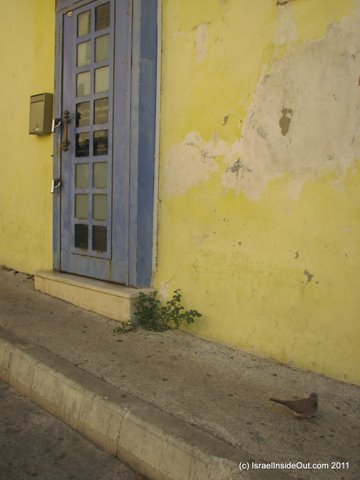
Enjoy our photos of Neve Tzedek


Old Jaffa – An Introduction
The ancient port city of Jaffa is one of the oldest cities in Israel and one of the oldest sea ports in the world.

Old Jaffa
Legend claims it is named for Noah's son Jefet, who is said to have settled there after the flood. Still others cite the similarity between Jaffa or Yaffo in Hebrew and Yaffa, the Hebrew word for beauty.
The multiple layers of human civilization that comprise its ancient tell (or mound), have yielded up discoveries as unique as an Iron Age altar with a lion's skull. Ancient Egyptian papyrus tells of the city's conquest by Pharaoh Thutmose III in the 15th century B.C.E. Thutmose's general used his own version of the Trojan Horse by sending baskets of gifts to the king of Jaffa with Egyptian soldiers hidden inside.
Later Jaffa is mentioned in the Bible as the port through which Solomon brought cedars of Lebanon to build the Temple. Jonah set sail from Jaffa's port, when he sought to flee the Lord and was swallowed by a whale. In the New Testament, Jaffa was the home of Simon the Tanner, on whose roof Peter had a vision that changed Christianity's relationship to Judaism ever since. In Greek mythology, a rock at the entrance to Jaffa's port is where Perseus saved Andromeda by slaying the Hydra.

Jaffa's Artist Colony
Today Old Jaffa is home to many galleries, its charming alleyways, street art and terrific views of Tel Aviv and the Mediterranean coast make it a great place to explore and enjoy a later afternoon stroll. During the summer months a series of performances is held in the old town known as Jaffa Nights. If you choose to visit Old Jaffa, don't miss the sculpture with a live suspended orange tree at the end of Mazal Arye Street.

View of Tel Aviv from Old Jaffa
A Short Walk in Old Jaffa
 Nightview of Old Jaffa & the Coast
Our walk begins on Louis Pasteur St. near where it turns off of Jefet St. and heads down towards the port. On the right is a fountain with a sculpture of a whale by the local artist Ilana Goor. The sculpture was inspired by the bible story of Jonah and the whale.
Nightview of Old Jaffa & the Coast
Our walk begins on Louis Pasteur St. near where it turns off of Jefet St. and heads down towards the port. On the right is a fountain with a sculpture of a whale by the local artist Ilana Goor. The sculpture was inspired by the bible story of Jonah and the whale.
A few meters west of the fountain, turn right (north) and walk up the steps passed a missing section of Jaffa's walls, where they were breached by Napoleon's soldiers in 1799. Bearing slightly to the right and then continuing up the stairs takes us to Mazal Dagim St, where we stop to look at the narrow covered street and the artwork installed on its walls. Many of the streets in Old Jaffa are named for signs of the zodiac. Some of the zodiac signs even appear on street signs (Mazal xx = Sign of xx in the Zodiac). We then turn to the right, follow the lane to the first right turn and then left to reach a sculpture of a suspended orange tree at the end of Mazal Arye St. The sculpture was created by the artist Ran Morin and inspired by that great Israeli icon the Jaffa Orange.
Leaving the suspended orange, we backtrack slightly and turn right up Mazal Gidi St. to reach the southern side of Tel Jaffa. In the park to our left is an archaeological site with a sculpture representing an Egyptian gate dubbed 'Ramses Gate'. The gate reminds us of how Pharaoh Thutmose III conquered the city in the 15th century B.C.E., by sending baskets of gifts to the king of Jaffa with Egyptian soldiers hidden inside.
 Statue of Faith
A stone paved path leads up to the top of the Tel Jaffa, where we find a gate-like sculpture by the artist Dan Kafri called a 'Statue of Faith'. Several biblical scenes are carved on the sculpture, including the Binding of Isaac, the Conquest of Jericho and Jacob's Ladder. The top of the Tell also offers an inviting view to the north of Tel Aviv's Mediterranean coast.
Statue of Faith
A stone paved path leads up to the top of the Tel Jaffa, where we find a gate-like sculpture by the artist Dan Kafri called a 'Statue of Faith'. Several biblical scenes are carved on the sculpture, including the Binding of Isaac, the Conquest of Jericho and Jacob's Ladder. The top of the Tell also offers an inviting view to the north of Tel Aviv's Mediterranean coast.
Descending the tell on its west side takes us to Kedumim Sq. and our next stop in front of St. Peter's Church. This Catholic church was built in the late 19th century by the Franciscan Order with funding from the Spanish royal house. Both the Franciscan and Spanish royal emblems appear above the church's main entrance. One of the chapels is part of an earlier church built on the same location by the Crusader king Louis IX. The church is dedicated to where, according to Acts 10:8-28, Peter had a vision while went in a trance on the roof of Simon the Tanner.
Tel Aviv from Tel Jaffa
Looking out to sea, just north of the church we can see the rocks at the entrance to Jaffa Port. According to Greek mythology, one of these rocks is where Perseus saved Andromeda and the city of Jaffa by slaying a multi-headed sea monster, known as the Hydra.
This concludes our walk in Old Jaffa. Here are some options for further exploration:
1. Follow Mazal Betulla St., just south of St. Peter's Church down to the
port to explore Jaffa's harbor area.
2. Continue north to Jaffa's clock tower on Yefet St., Aboulafia's Bakery and the flea market nearby.
3. From Mazal Dagim Street - enter the Artist's Colony and wander through the alleys - many of them have artwork mounted on the walls outside the shops making for a different atmosphere.
4. Visit Old Jaffa at night.
For further information read the Introduction to Jaffa and view the Jaffa Gallery. Certain parts of this walk are accessible, but it is quite steep and some of the streets have steps, (some with ramps.)
Nightview of Old Jaffa & the Coast
A few meters west of the fountain, turn right (north) and walk up the steps passed a missing section of Jaffa's walls, where they were breached by Napoleon's soldiers in 1799. Bearing slightly to the right and then continuing up the stairs takes us to Mazal Dagim St, where we stop to look at the narrow covered street and the artwork installed on its walls. Many of the streets in Old Jaffa are named for signs of the zodiac. Some of the zodiac signs even appear on street signs (Mazal xx = Sign of xx in the Zodiac). We then turn to the right, follow the lane to the first right turn and then left to reach a sculpture of a suspended orange tree at the end of Mazal Arye St. The sculpture was created by the artist Ran Morin and inspired by that great Israeli icon the Jaffa Orange.
Leaving the suspended orange, we backtrack slightly and turn right up Mazal Gidi St. to reach the southern side of Tel Jaffa. In the park to our left is an archaeological site with a sculpture representing an Egyptian gate dubbed 'Ramses Gate'. The gate reminds us of how Pharaoh Thutmose III conquered the city in the 15th century B.C.E., by sending baskets of gifts to the king of Jaffa with Egyptian soldiers hidden inside.
Statue of Faith
Descending the tell on its west side takes us to Kedumim Sq. and our next stop in front of St. Peter's Church. This Catholic church was built in the late 19th century by the Franciscan Order with funding from the Spanish royal house. Both the Franciscan and Spanish royal emblems appear above the church's main entrance. One of the chapels is part of an earlier church built on the same location by the Crusader king Louis IX. The church is dedicated to where, according to Acts 10:8-28, Peter had a vision while went in a trance on the roof of Simon the Tanner.
Tel Aviv from Tel Jaffa
Looking out to sea, just north of the church we can see the rocks at the entrance to Jaffa Port. According to Greek mythology, one of these rocks is where Perseus saved Andromeda and the city of Jaffa by slaying a multi-headed sea monster, known as the Hydra.
This concludes our walk in Old Jaffa. Here are some options for further exploration:
1. Follow Mazal Betulla St., just south of St. Peter's Church down to the
port to explore Jaffa's harbor area.
2. Continue north to Jaffa's clock tower on Yefet St., Aboulafia's Bakery and the flea market nearby.
3. From Mazal Dagim Street - enter the Artist's Colony and wander through the alleys - many of them have artwork mounted on the walls outside the shops making for a different atmosphere.
4. Visit Old Jaffa at night.
For further information read the Introduction to Jaffa and view the Jaffa Gallery. Certain parts of this walk are accessible, but it is quite steep and some of the streets have steps, (some with ramps.)
Tel Hadid
Tel Hadid is an excellent view point overlooking the Tel AvivMetropolitan Area. Tel Hadid is located on the first ridge of hills area rising east of the coastal plain, and is just behind the Ben Gurion International Airport. The Tel Hadid area was populated for thousands of years and includes many remains from different periods.
Tel Hadid is also the southern edge of the largest "green lung" of central Israel - the Ben Shemen Forest which is an excellent starting point for relaxing, hiking and biking.
Getting to Tel Hadid
Drive on route 444 and turn east 2 km north of the juction with route 443.
The park road will take you into the site.
The park road will take you into the site.
Israeli Ceramic Exhibition - Eretz Israel Museum Tel Aviv
Arts & Technology
The Sixth Biannual Israeli Ceramic Exhibition in Tel Aviv is currently running at the Eretz Israel Museum located in the Northern part of Tel Aviv.

Exhibit - Sixth Biannual Israeli Ceramic Exhibition
The exhibition includes the works of 110 ceramic artists and designers under the theme of The Combination of Arts and Crafts with Technology.
Tel Aviv Beaches
One of the main attractions of Tel Aviv are the miles of beautiful beaches, swimming in the Mediterranean and of course walking from one beach to next along The Tayelet. These are the main Tel Aviv Beaches and you can see their location on our Tel Aviv Beach Map

Tel Aviv Beach
Rami's Favorite Tel Aviv Art Galleries
Tel Aviv offers a wide variety of art museums and art galleries of all types and sizes. Here are a few of my favorites.
The largest and the most diverse is the Tel Aviv Museum of Artlocated at the cultural center of the city, just by the municipal library, a theater, and the Opera hall in the Shaul HaMelech Boulevard area.
HaTachana

HaTachana - Station & Rails
For a period of about 400 years that ended in the First World War, the whole of the Middle East was occupied under the rule of the Ottoman Empire based out of Istanbul. Israel's landscape still holds many reminders of those times. One of the nicest places is the Jaffa train station (that was the end point of the Jerusalem-Jaffa route). The coastal railway connected Turkey with Egypt and passed through Jaffa. The train journey to Jerusalem took around 4 hours (and is still a recommended item on the tourist’s itinerary - although it no longer departs from this station.) In 1913 around 183000 people travelled on the line to Jerusalem.
The compound called "Hatachana", ("The Station" in Hebrew) operated from 1892 and was abandoned when the rule of Great Britain terminated at the dawn of the state of Israel in May 1948.
MORE ARTICLES...
123456

No comments:
Post a Comment